
📑 On this page
Two official numbers about the same month landed four days apart. On Thursday 12 November, the National Statistics Office put retail inflation (CPI) at 6.09 per cent for October. On Monday 16 November, the Office of the Economic Adviser put wholesale inflation (WPI) at 12.29 per cent, up from 11.39 in September. Neither office made a mistake.
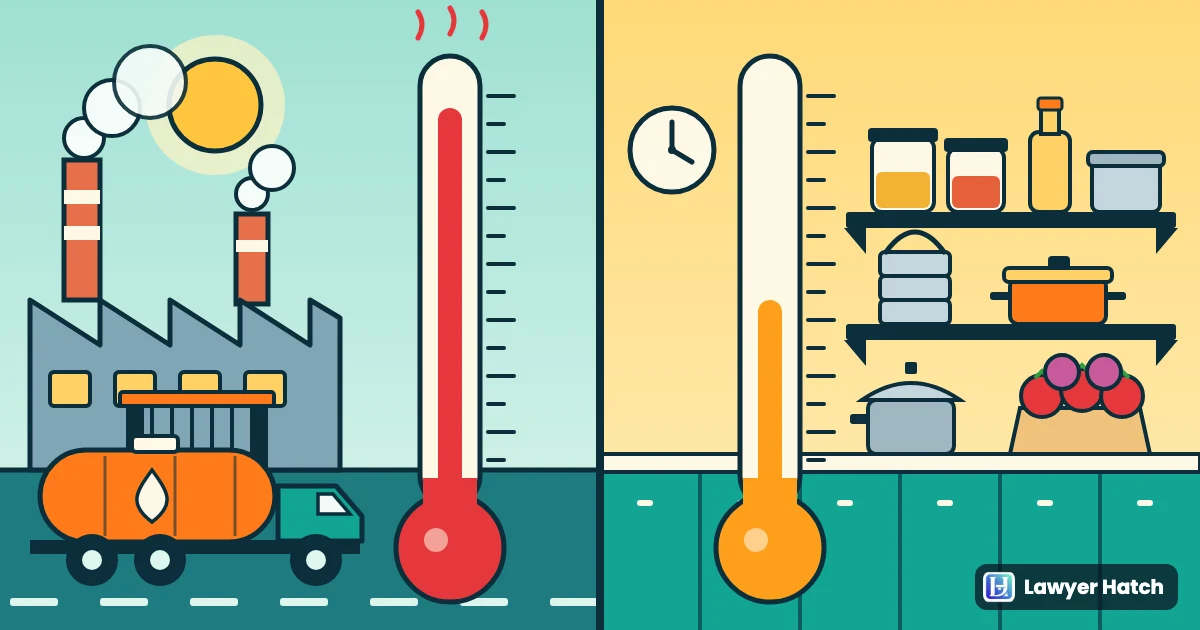
Picture two thermometers in one room. One hangs at a factory gate, where a tanker is filling up and steel coils are rolling out of the yard. The other hangs on a kitchen shelf, beside the dal and the cooking oil. They read differently because they hang in different places and are built from different baskets. The Hindu called October the second consecutive month of double-digit wholesale inflation, and the official series bears that out: 9.92 per cent in August, then 11.39, then 12.29.
We already read the kitchen thermometer on 12 November, in Inflation crossed RBI's 6% line, so this article does not go through that release again. It sets the two instruments side by side: what each measures, who publishes it, why they disagree this October, and what usually follows.
- 12.29 vs 6.09: WPI (goods at first sale, from the Office of the Economic Adviser) against CPI (retail prices including services, from the National Statistics Office). The gap is 6.2 percentage points.
- Fuel and power: weight 14.11 out of 100, inflation 32.84 per cent. By my arithmetic it supplies about 4.0 of the 12.29 points.
- Food agrees: the WPI food index is up 8.58 per cent, CPI food 8.94. The gap is not in the grocery bill.
- New base year 2022-23: The Hindu notes the new series allows rates only from April 2024, so "highest" means highest in a short series.
- Next is a lag, not a promise: the official FAQ says wholesale moves reach retail after a lag.
Thermometer one hangs at the factory gate
The WPI tracks the average change in prices of goods when they are sold in bulk for the first time: ex-factory for manufactured goods, ex-mine for minerals and at the mandi for farm produce. That is how the Office of the Economic Adviser (OEA) describes it in its FAQ on the new series. It counts goods only. Healthcare, education, telecom and the like are not in it. The price is what the producer receives, leaving out tax and trade and transport margins.
The OEA, part of the Department for Promotion of Industry and Internal Trade (DPIIT), releases the provisional index on the 14th of the following month, or the next working day. The 14th was a Saturday, so October's numbers came on Monday 16 November. The base year is 2022-23 = 100. The basket has 957 items, up from 697, and weights come from the gross value of output: what India's farms, mines and factories produce, not what households spend.
Three major groups carry the weights. Primary articles (farm produce, minerals) hold 22.76 out of 100, fuel and power 14.11, and manufactured products 63.13. October's reading is provisional, built from a weighted response rate of 81.1 per cent.
Thermometer two hangs on the kitchen shelf
The CPI works from the other end. It collects retail prices in shops and markets, the prices consumers actually pay, and its weights come from what households spend, taken from a consumer expenditure survey in the base year. Food is the biggest block, at about 35 out of 100. Its basket also holds services (housing, education, medical care, recreation), which the WPI leaves out.
The National Statistics Office (MoSPI) released the October CPI on 12 November, base year 2024 = 100, at 6.09 per cent (provisional). The earlier article has the page-by-page reading.
Side by side
| WPI (factory gate) | CPI (kitchen shelf) | |
|---|---|---|
| What it tracks | Bulk, first-sale prices of goods | Retail prices paid by consumers, goods and services |
| Where prices are taken | Ex-factory, ex-mine, mandi | Shops and markets |
| Published by | Office of the Economic Adviser, DPIIT | National Statistics Office, MoSPI |
| October data released | 16 November (the 14th fell on a Saturday) | 12 November |
| Weights come from | Gross value of output | Household spending survey |
| Food weight | 24.99 (food index) | about 35 |
| Services | Not included | Included |
| Base year | 2022-23 = 100 | 2024 = 100 |
| October 2026 | 12.29 per cent | 6.09 per cent |
| Used mainly for | Deflating GDP and industrial output, contract price clauses, early warning | The RBI's inflation target, household cost of living |
Why they disagree this October
Reason one: the weights decide who shouts loudest. A rate tells you how far prices moved. The weight tells you how much that move matters to the total. The last column below is my own arithmetic: weight × change in the group's index ÷ the year-ago all-commodities index (100.9).
| Group | Weight (of 100) | Index Oct 2025 | Index Oct 2026 | Inflation (%) | Points added to 12.29 |
|---|---|---|---|---|---|
| Primary articles | 22.76 | 110.4 | 120.6 | 9.24 | about 2.3 |
| Fuel and power | 14.11 | 87.1 | 115.7 | 32.84 | about 4.0 |
| Manufactured products | 63.13 | 100.6 | 110.2 | 9.54 | about 6.0 |
| All commodities | 100 | 100.9 | 113.3 | 12.29 | 12.3 |
Source: OEA press release (weights, indices, rates); last column mine, rounded. Fuel and power is 14 per cent of the basket but about a third of the inflation. Manufactured products supply about half because they are nearly two-thirds of the weight. Inside fuel, crude petroleum and natural gas has the headline rate, 70.80 per cent, but a weight of only 0.72, so it adds about 0.4 points. Mineral oils (petroleum products), at 45.57 per cent with a weight of 8.19, add about 3.2. The loudest number is not the heaviest.
Reason two: food agrees, so look elsewhere. The WPI food index rose 8.58 per cent, against 8.94 for CPI food in the 12 November release. The gap sits in what only one basket holds. The WPI carries inputs that households do not buy as such: basic metals (17.21 per cent) and chemicals (17.53). By my arithmetic those two add about 2.3 points to the WPI. The CPI carries services, which move slowly, and its core rate (leaving out food and fuel) was 4.5 per cent, as the Indian Express reported.
Reason three: the base effect. Inflation compares today's index with the index of a year ago. In the release's own chart, WPI inflation in October 2025 was minus 1.18 per cent, with the index at 100.9. A low starting point makes any rise look steeper. The new series also has a short memory: the OEA carries the index from April 2023, and a yearly rate needs a year-earlier index, so rates begin in April 2024. That fits The Hindu's remark that October is the highest since at least then, and it means no comparison with old-series records.
Reason four: oil, and the bill behind it. The Hindu reported on 18 November that India's crude import bill rose 87.5 per cent year on year to $19.5 billion in October, on higher international prices and renewed West Asia tensions, with import volumes up 11 per cent. Value is price times volume, so the average price per unit rose by about 1.875 ÷ 1.11 = 1.69, roughly 69 per cent (my arithmetic, not an official series). That is in the same ballpark as the WPI's 70.80 for crude and gas, though the two measure different things. The net bill, after petroleum product exports, rose 60 per cent to $16 billion.
What usually happens next
The rise or fall in prices at wholesale level spills over to the retail level after a lag.
The logic: dearer fuel raises the cost of moving everything, dearer metals and chemicals raise the cost of making things, and shops pass some of it on. The same FAQ adds a warning: much of the WPI basket is inputs households do not buy directly, so even a big wholesale move "need not necessarily translate" into CPI in the short run.
The forecast on record: The Hindu's summary line says economists expect this wholesale inflation to soon translate into higher consumer prices, and an interest rate hike to be nearly certain. That is a view reported by one newspaper, not a statistic, and this article makes no prediction of its own.
The case for patience, from the same release: manufactured products inflation eased from 9.76 to 9.54 per cent and the food index from 8.66 to 8.58. October's jump is mostly energy, with fuel and power up from 25.85 to 32.84 per cent and electricity from minus 0.43 to plus 8.06. And fuel is jumpy: its index ran 113.4, 110.9, 105.2, 108.5, 110.5, 115.7 from May to October. In CPI, the housing and fuel division (which includes rent) is at only 2.90 per cent, against transport at 5.84. The next WPI release is due on Monday 14 December.
Why the RBI reads the kitchen thermometer
The RBI's inflation target is set on CPI, not WPI. The target, the Monetary Policy Committee and what happens on a miss are in the 12 November article, so we will not repeat them. The question here is why CPI. A 2017 RBI staff working paper by Praggya Das and Asish Thomas George (the authors' views, on the older WPI series) supports the choice, which followed the 2014 Urjit Patel committee's recommendation of headline CPI as the anchor. Its reasons:
- CPI holds sticky items, mainly non-tradable services, so it carries more information on persistent, underlying inflation.
- WPI's exclusive items (basic and intermediate goods, industrial products) are largely internationally traded and tied to global commodity cycles, so they are volatile.
The strongest case for WPI comes from the OEA itself: it lets the government spot rising prices of essential commodities early and act before the increase spills over to retail. Seen that way the two are not rivals. One is the early warning, the other is the target.
Facts you must know
| Fact | Detail |
|---|---|
| Who compiles WPI | Office of the Economic Adviser, DPIIT, Ministry of Commerce and Industry |
| Who compiles CPI | National Statistics Office, MoSPI |
| Current WPI base year | 2022-23, the eighth base (after 1952-53, 1961-62, 1970-71, 1981-82, 1993-94, 2004-05, 2011-12) |
| Working Group for the revision | Chaired by Prof Ramesh Chand, Member, NITI Aayog; set up on 30 December 2024; report in April 2026 |
| Basket | 957 items (was 697); price quotations 15,254 (was 8,331) |
| What changed in groups | Crude petroleum and natural gas moved from primary articles to fuel and power; solar, wind and nuclear power added under electricity |
| Companion indices | Output PPI, trial Input PPI (manufacturing only), and Service PPIs for seven services, including railways, passenger air travel and telecom |
| Uses of WPI | Deflator for GDP and industrial output, contract indexation, early warning |
Try both thermometers yourself
Farah, a commerce student in Hyderabad, copies three rows from the OEA's October release into her notebook. All figures are from the release: weights out of 100, and group indices with base 2022-23 = 100.
| Group | Weight | Index Oct 2025 | Index Oct 2026 |
|---|---|---|---|
| Primary articles | 22.76 | 110.4 | 120.6 |
| Fuel and power | 14.11 | 87.1 | 115.7 |
| Manufactured products | 63.13 | 100.6 | 110.2 |
Farah works out year-on-year inflation for fuel and power from her table. Which is the nearest figure?
▸ Show solution
Using the weights as given, what was the all-commodities index in October 2025?
▸ Show solution
Which objection to Ravi's reasoning is the strongest?
▸ Show solution
Which body compiles and releases the Wholesale Price Index?
▸ Show solution
In the WPI series with base year 2022-23, which group was moved from primary articles to the fuel and power major group?
▸ Show solution
Which index does the RBI's flexible inflation target use, and what is the target?
▸ Show solution
Connect the dots
Sources
- Office of the Economic Adviser, DPIIT: Provisional WPI, Output PPI and trial Input PPI for October 2026 (press release, 16 Nov 2026)
- Office of the Economic Adviser: FAQs on the new WPI series (base year 2022-23), PPIs and Service PPIs
- DD News (PIB): Wholesale price inflation rises to 12.29% in October (16 Nov 2026)
- The Hindu: Wholesale inflation rises to 12.3% in October 2026, second straight month of double-digit inflation (16 Nov 2026)
- The Hindu: India's Oct. crude import bill soars 87.5% to $19.5-bn amid West Asia tensions (18 Nov 2026)
- RBI Working Paper 05/2017: Comparison of Consumer and Wholesale Prices Indices in India (Das and George)
- Lawyer Hatch, 12 Nov 2026: Inflation crossed RBI's 6% line (CPI figures, drawn from the MoSPI release and the Indian Express)
Frequently asked questions
What was WPI inflation in October 2026?
Why is WPI inflation higher than CPI inflation?
Does the RBI target WPI inflation?
What is new in the WPI series with base year 2022-23?
Will high wholesale inflation raise shop prices?
When is the next WPI release?
Keep reading



